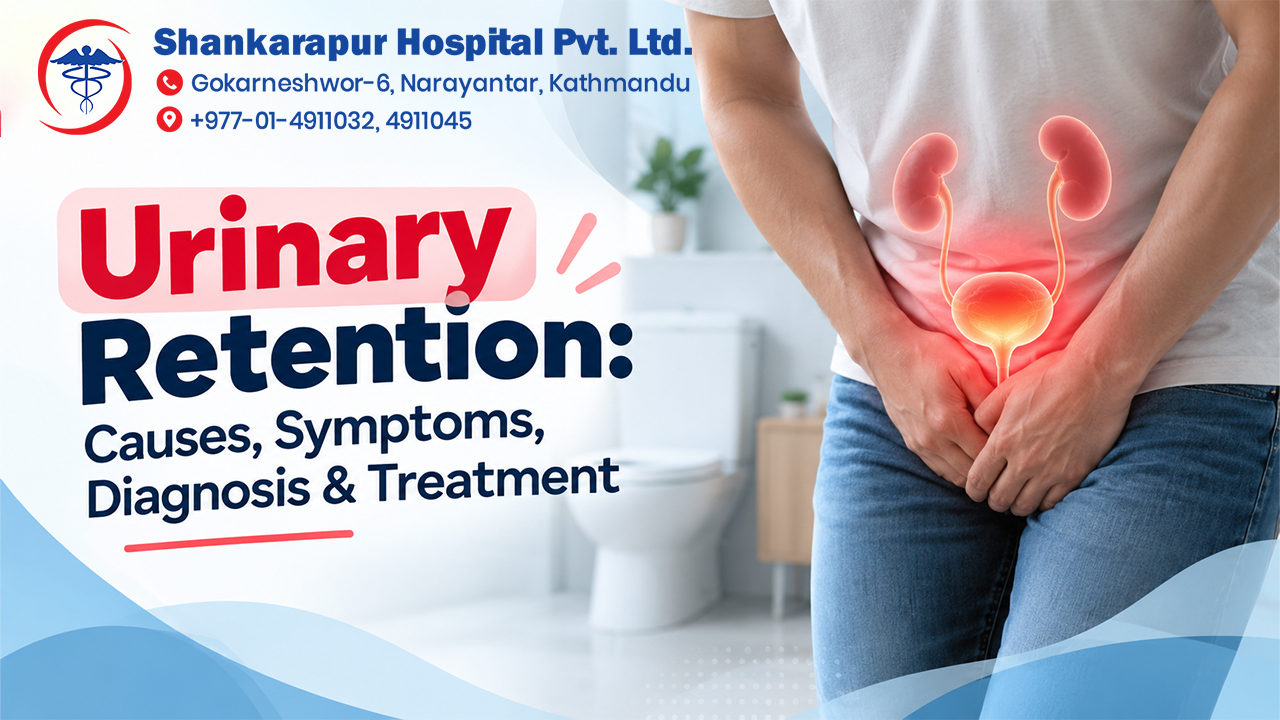
A weak urine flow in men can feel like a slow, thin, stop-start or difficult-to-start stream. You may need to strain, wait before urine begins, take longer to empty your bladder, or feel that urine is still left afterward.
The important point is that weak urine flow is a symptom, not a diagnosis. An enlarged prostate is a common cause as men get older, but it is not the only one. Urethral narrowing, urinary infection or prostatitis, bladder stones, medicines, nerve problems, constipation and a bladder that does not contract strongly enough can all affect flow.
The National Institute of Diabetes and Digestive and Kidney Diseases (NIDDK) explains that prostate problems can cause weak stream, difficulty starting or maintaining urination, dribbling and incomplete emptying. Its guidance on urinary retention also notes that urinary blockage can result from prostate enlargement, urethral stricture, stones, constipation, infection and other conditions.
If your weak stream is persistent, worsening or accompanied by incomplete bladder emptying, it is worth being assessed rather than assuming it is a normal part of ageing.
For local specialist care, Shankarapur Hospital has a verified Urology Department in Kathmandu.
What does weak urine flow mean?
Doctors often group weak flow with other lower urinary tract symptoms (LUTS). These symptoms can include difficulty starting urination, a slow or thin stream, a stream that repeatedly stops and starts, straining, dribbling, incomplete emptying, frequency, urgency and waking at night to urinate.
A weak stream can occur when urine meets resistance as it leaves the bladder, or when the bladder muscle cannot generate enough pressure to empty effectively. Sometimes both problems occur together. That distinction matters because two men with the same complaint may need very different treatment.
What causes weak urine flow in men?
1. Enlarged prostate (BPH)
Benign prostatic hyperplasia (BPH) is a non-cancerous enlargement of the prostate. The prostate sits below the bladder and surrounds part of the urethra. As prostate tissue enlarges, it may narrow the channel through which urine passes.
According to the Urology Care Foundation’s BPH guidance, symptoms may include weak stream, straining, incomplete emptying, intermittency, frequency, urgency and nocturia.
BPH becomes more common with age, but prostate size does not perfectly predict how severe symptoms will be. For a deeper explanation, see Shankarapur Hospital’s guide to enlarged prostate (BPH) symptoms, diagnosis and treatment.
2. Urethral stricture or other narrowing
A urethral stricture is scar-related narrowing of the urethra. It can reduce the diameter of the urinary passage and make the stream thin, weak, spraying or difficult to maintain.
A history of urinary catheterization, urethral procedures, pelvic injury, infection or prior surgery may be relevant. The NIDDK lists urethral stricture and scar tissue at the bladder neck among conditions that can block urine flow.
3. Prostatitis or urinary infection
Inflammation or infection can make urination painful, urgent and difficult. Prostatitis may be associated with pelvic or perineal discomfort, painful urination, fever or chills in bacterial cases, and sometimes difficulty emptying the bladder.
A urinary infection may also cause burning, frequency, urgency, cloudy urine or blood in the urine. If weak flow occurs together with burning or pain, read Shankarapur Hospital’s guide to pain while urinating and when to get checked.
4. Bladder stones or another physical blockage
A stone in the bladder or urinary passage may interfere with flow, especially if it moves near the bladder outlet or urethra. Symptoms can overlap with prostate enlargement and may include stop-start urination, pain, blood in the urine, frequency or incomplete emptying.
Learn more about bladder stone symptoms, diagnosis and treatment.
5. Weak bladder contraction or nerve-related problems
Urination depends on coordination between the bladder muscle, urinary sphincters, urethra and nervous system. Some people have difficulty emptying because the bladder muscle does not contract strongly enough.
This can occur with ageing, long-standing obstruction, diabetes-related nerve damage, spinal or neurologic disease, previous pelvic surgery, or other conditions affecting nerve control. The NIDDK explains that urinary retention can result either from blockage or from the bladder being unable to generate enough force to empty fully.
6. Medicines and constipation
Some medicines can worsen urinary difficulty, especially in someone who already has borderline obstruction. Cold and allergy medicines, certain antidepressants and some bladder medicines are examples that may contribute in susceptible people.
Do not stop prescribed medication on your own. Bring a complete list of prescription medicines, over-the-counter products and supplements to your appointment. Constipation can also worsen urinary symptoms in some people.
Does age change what is likely to cause a weak stream?
Age can change which causes are more likely, but it should not be used as a diagnosis by itself. BPH becomes increasingly relevant in middle-aged and older men, while urethral stricture, prostatitis, medication effects, pelvic-floor problems and neurologic causes can occur at younger ages as well.
In a younger man, a very thin or spraying stream, especially after prior catheterization, urinary surgery or pelvic injury, may make urethral narrowing more important to investigate. Burning, pelvic discomfort or fever can point toward inflammation or infection. In an older man, a gradually weakening stream together with nocturia, hesitancy and incomplete emptying may fit BPH, but bladder muscle weakness can produce a similar pattern.
The practical lesson is that age helps shape the clinical questions; it does not replace testing. A clinician still needs to consider symptom pattern, medical history, medicines, examination findings and, when appropriate, urine testing, flow measurement, residual urine and imaging.
Does a weak stream always mean there is a blockage?
No. A weak stream can result from resistance to urine flow, poor bladder contraction, or both. This is clinically important because treatments that reduce outlet resistance will not necessarily solve a bladder-contraction problem.
For example, prostate enlargement or urethral stricture can physically narrow the urinary outlet. By contrast, nerve damage or reduced bladder-muscle function may leave the outlet open enough but still produce poor emptying. Some men have mixed problems, such as prostate obstruction after years of increasing bladder strain.
This is why a urologist may combine several pieces of information instead of judging the cause from stream strength alone.
Symptom patterns that can help guide evaluation
The table below is a guide to discussion, not a diagnosis.
| What you notice | Possible explanation to discuss |
|---|---|
| Gradually weaker stream, nocturia, hesitancy, incomplete emptying | BPH / bladder outlet obstruction |
| Very thin or spraying stream, especially with prior urethral procedure or catheter | Urethral stricture |
| Burning, urgency, fever, pelvic discomfort | UTI or prostatitis |
| Stop-start flow, pain or blood in urine | Stone or other obstruction |
| Weak stream with long-standing diabetes or neurologic disease | Bladder or nerve dysfunction |
| Sudden worsening after starting a cold/allergy medicine | Medication-related worsening |
| Inability to urinate with painful lower-abdominal fullness | Acute urinary retention — urgent care |
Symptoms overlap. A clinician may need tests before the cause becomes clear.
Is weak urine flow a sign of prostate cancer?
A weak stream can occur in men who have prostate cancer, but urinary symptoms are not specific for cancer and are commonly caused by non-cancerous conditions such as BPH.
Early prostate cancer may produce no urinary symptoms at all. Therefore, stream strength cannot confirm or rule out prostate cancer.
If you are concerned about cancer risk, persistent urinary changes, blood in urine or other prostate symptoms, read Shankarapur Hospital’s guide to prostate cancer symptoms and when to get checked.
When is weak urine flow an emergency?
Seek urgent medical care if you cannot pass urine at all, particularly if your lower abdomen is becoming painful or swollen. Sudden inability to urinate can be acute urinary retention and may require immediate bladder drainage.
The NIDDK advises getting medical help right away if you cannot urinate.
Prompt assessment is also important if weak flow occurs with fever or chills, severe lower-abdominal or flank pain, visible blood in the urine, vomiting or rapidly worsening urinary difficulty.
Shankarapur Hospital lists 24/7 emergency services. If symptoms are severe or you cannot urinate, use emergency care rather than waiting for a routine appointment.
How is weak urine flow diagnosed?
The goal is not simply to confirm that the stream is weak. The goal is to determine why it is weak and whether urine is being left behind in the bladder.
Medical history and examination
A urologist may ask when the weak flow started, whether it is worsening, whether you strain, whether the stream sprays or stops and starts, whether you feel empty afterward, whether you have pain or blood, and whether you have had previous catheters, urinary procedures or pelvic injury.
Urine and blood tests
Urinalysis can look for signs of infection, blood, glucose or other abnormalities. Blood tests may be used when kidney function, infection or another condition is a concern. A PSA blood test may be discussed depending on age, symptoms, examination and individual prostate-cancer risk.
Post-void residual measurement
A post-void residual test measures how much urine remains in the bladder after you urinate. The NIDDK states that residual urine can be measured using ultrasound or a catheter.
Uroflowmetry
Uroflowmetry measures how much urine you pass and how quickly it flows. A low flow rate may suggest obstruction or poor bladder contraction, but it does not identify the cause on its own.
Ultrasound and other imaging
Ultrasound can help assess the urinary tract, bladder, residual urine and sometimes prostate size. Other imaging may be selected depending on pain, stones, blood in the urine, kidney concerns or other findings.
Shankarapur Hospital’s Diagnostic & Imaging Services publicly list ultrasound and CT among available imaging modalities.
Cystoscopy or urodynamic testing
Some men need additional testing if symptoms are complex, the diagnosis remains uncertain, urethral narrowing is suspected or a procedure is being considered. These tests are not required for every person with a weak stream.
How is weak urine flow treated?
Treatment depends on the underlying cause, symptom severity, bladder emptying, complications and individual priorities.
Treatment when BPH is the cause
For mild BPH symptoms, monitoring and selected lifestyle changes may be sufficient. When symptoms are bothersome, a clinician may consider medicines.
When prostate obstruction is significant or complications occur, a urologist may discuss a procedure or surgery. Shankarapur Hospital’s Urology Department lists prostate enlargement treatment with TURP. For procedure-specific information, read the hospital’s guide to TURP surgery for enlarged prostate.
Treatment when infection or prostatitis is the cause
Treatment depends on whether infection is confirmed and what type of prostatitis is present. Antibiotics are appropriate for bacterial infection but should not be started simply because the stream is weak.
Treatment when urethral narrowing or a stone is the cause
A structural blockage may require a procedure rather than a prostate medicine. The exact approach depends on the location and severity of narrowing, stone size and location, previous procedures, and the condition of the bladder and kidneys.
Treatment when the bladder does not empty effectively
If the bladder is retaining a significant amount of urine, management may include treating the cause, bladder drainage when necessary, changing contributing medicines, and addressing neurologic or bladder-function problems. Acute retention may require catheter drainage.
Can lifestyle changes improve urine flow?
Lifestyle changes may reduce some urinary symptoms, but they do not reliably remove a true mechanical blockage.
- Reduce unnecessary fluid intake close to bedtime if nocturia is a problem.
- Limit caffeine or alcohol if they worsen urinary symptoms.
- Treat constipation.
- Avoid prolonged urine holding.
- Review medicines that may worsen retention with a clinician.
- Keep a bladder diary.
If night-time urination is a major symptom, see the hospital’s guide to frequent urination at night.
Do not rely on supplements or home remedies to treat persistent weak flow without understanding the cause.
What should you tell your urologist?
- How long the stream has been weak.
- Whether it is gradually worsening or changed suddenly.
- Whether you strain to start or continue.
- Whether the stream sprays, splits or stops and starts.
- Whether you dribble afterward.
- Whether you feel completely empty.
- How many times you urinate during the day and night.
- Whether you have burning, pain, fever, urgency or blood in urine.
- Any history of catheterization, urinary surgery or pelvic injury.
- Diabetes, neurologic disease or spinal problems.
- All prescription medicines, over-the-counter drugs and supplements.
Urology care in Kathmandu
For men in Kathmandu with persistent weak urine flow, Shankarapur Hospital has a dedicated Urology Department, prostate enlargement treatment including TURP, urinary-condition care, diagnostic and imaging services, and OPD, inpatient and emergency services.
If your symptoms are persistent, worsening or affecting bladder emptying, you can book a urology appointment at Shankarapur Hospital for an individual assessment.
If you cannot urinate at all or have severe red-flag symptoms, use urgent/emergency care rather than waiting for a routine booking.
Key takeaways
- A weak urine stream should not be diagnosed from the symptom alone.
- BPH is a common cause in older men, but it is not the only cause.
- Urethral stricture, infection, stones, bladder weakness, neurologic problems, constipation and medicines can also reduce flow.
- Tests are selected to determine whether there is obstruction, incomplete emptying, infection or poor bladder function.
- Treatment can range from observation and medicine to a procedure or surgery, depending on the cause.
- Sudden inability to urinate is an emergency.
- Persistent or worsening symptoms deserve a urology assessment.
Frequently Asked Questions
Can a weak urine stream improve on its own?
It depends on the cause. A temporary medication effect, mild inflammation or constipation-related worsening may improve when the trigger resolves. Persistent obstruction, urethral narrowing or significant bladder dysfunction usually needs proper evaluation.
Is weak urine flow normal after age 50?
Urinary symptoms become more common with age, particularly as BPH becomes more common, but a weak stream should not automatically be dismissed as normal ageing. Persistent or worsening symptoms can still require assessment.
Can dehydration cause a weak stream?
Passing a small amount of concentrated urine can make urination feel different, but persistent weak flow should not be attributed to dehydration without considering other causes.
Can diabetes affect urine flow?
Diabetes can affect bladder nerves and bladder contraction in some people, which may contribute to incomplete emptying or urinary retention.
Does every man with a weak stream need surgery?
No. Treatment depends on the cause and severity. Some men need monitoring or medicine; others may need treatment for infection, a urethral problem, a stone, bladder dysfunction or significant prostate obstruction.
Which doctor should I see for weak urine flow?
A urologist is the specialist who evaluates urinary-tract and male urinary/prostate problems. Primary-care clinicians can also begin the evaluation and refer when needed.