Causes of pain while urinating range from simple irritation to infections that need medical treatment. This symptom often described as burning, stinging, or discomfort when passing urine is medically called dysuria. It’s common, it can happen to any age group, and it can affect people of all genders. Dysuria often points to a problem in the urinary tract (urethra, bladder, kidneys), but it can also come from nearby skin or reproductive tissues.
This guide by Shankarapur Hospital, Kathmandu explains 10 common causes, the typical signs that help you tell them apart, what tests a urology doctor in Kathmandu may recommend, and when it’s urgent to seek care.
Important: This blog is for education. Don’t self-diagnose or self-medicate with antibiotics especially because antibiotic resistance is increasing in Nepal and globally.
Causes of pain while urinating: quick symptom-to-cause table
Use this as a starting point (not a final diagnosis). Many causes overlap, so a test may still be needed.
|
What you notice |
More likely causes |
Why it fits |
|
Burning + frequent urge to urinate |
UTI (cystitis) |
Bladder/urethra irritation is classic. |
|
Burning + fever / back or side pain |
Kidney infection (pyelonephritis) |
Upper tract involvement needs urgent care. |
|
Pain at start of urination |
UTI/urethritis/irritation |
Often linked to urethral inflammation. |
|
Pain after urination |
Bladder/prostate issues |
Can point toward bladder outlet/prostate conditions. |
|
Sudden severe pain + blood in urine |
Stone (kidney/bladder) |
Stones can scratch/irritate urinary lining. |
|
Burning + vaginal itching/irritation |
Vaginitis / external irritation |
Pain may be from irritated skin. |
|
Burning after new product (soap/spray) |
Chemical irritation |
Irritants can inflame sensitive tissue. |
What is dysuria (painful urination)?
Dysuria means pain, burning, stinging, or discomfort with urination. It usually happens when urine touches tissue that is inflamed or irritated most commonly the urethra or bladder lining.
People describe dysuria as:
- burning while peeing
- stinging at the start or end of urination
- “hot” urine sensation
- discomfort deep in the pelvis or lower abdomen (sometimes)
Cleveland Clinic notes pain may occur at the start or after urination, and the timing can provide clues.
Key stats: how common UTIs and resistance are
Because UTIs are one of the most common causes of pain while urinating, the numbers are useful:
UTI lifetime risk (widely cited)
The Infectious Diseases Society of America (IDSA) notes women have a lifetime risk ~53% of experiencing UTI, and men have a lifetime risk ~14% (with risk rising with age).
Other clinical reviews commonly report ~50–60% of women experience at least one UTI in their lifetime.
Why antibiotic resistance matters (especially in Nepal)
Studies from Nepal report significant antimicrobial resistance among urinary pathogens, which can make “random antibiotics” risky and sometimes ineffective:
- A 2025 study from a tertiary care hospital in central Nepal highlights increasing antimicrobial resistance in uropathogens.
- A 2023 JNMA study reported multidrug-resistant E. coli among UTI patients (reported prevalence 17.17% in that study sample).
Bottom line: If dysuria lasts more than 1–2 days, repeats frequently, or comes with red-flag symptoms, testing (like urinalysis and urine culture) can save time and prevent complications.
Causes of pain while urinating: the 10 most common reasons
1) Urinary tract infection (UTI) / bladder infection (cystitis) leading causes of pain while urinating
Why it happens: Bacteria enter the urinary tract and irritate the urethra and bladder. UTIs are among the most common causes of dysuria in adults and are also common in teens.
Common signs
- burning urination
- frequent urination (small amounts)
- urgency
- cloudy or strong-smelling urine
- sometimes lower abdominal discomfort
What usually helps
- Urinalysis ± urine culture
- Treatment depends on test results, symptoms, and history (avoid self-starting antibiotics).
2) Kidney infection (pyelonephritis)
This is typically a more serious infection that can start as a lower UTI and move upward.
Common signs
- burning urination plus fever, chills, or feeling very unwell
- pain in the back/side below the ribs
- nausea/vomiting may occur
Why it matters
Kidney infections can become serious and often need urgent medical evaluation and sometimes hospital treatment.
3) Urethritis (inflammation of the urethra), including sexually transmitted infections (STIs)
Urethritis can be caused by different germs, including STIs. The key point for patients: you don’t need to guess testing matters.
Common signs
- burning at the start of urination
- urinary discomfort with minimal bladder symptoms
- sometimes unusual discharge (not always)
What to do
- See a clinician for confidential testing and the right treatment.
- For teens: it’s okay to ask for a private, respectful consultation.
4) Vaginitis or vulvovaginal irritation (for people with a vagina)
Sometimes the urinary tract is fine, the pain comes from irritated outer tissues, and urinating stings when urine touches inflamed skin.
Common signs
- itching, irritation, redness
- discomfort more “external” than deep bladder pain
- sometimes unusual discharge (depends on cause)
AAFP notes vaginitis is an important differential when dysuria is present.
5) Chemical irritation (soaps, sprays, perfumes, harsh cleansers)
Mayo Clinic lists soaps, perfumes, and other personal care products as possible irritants that can cause painful urination.
Clues
- symptoms start after a new product
- burning is mainly external
- urine tests may be normal
Safer habits
- use mild, fragrance-free products
- avoid douching or harsh “intimate washes”
6) Dehydration and concentrated urine
When you’re dehydrated, urine becomes more concentrated and can irritate inflamed tissue, making burning worse (especially if you already have mild irritation).
Clues
- dark yellow urine
- strong odor
- burning improves with fluids (unless infection exists)
Note: Dehydration alone shouldn’t cause ongoing dysuria for many days if it persists, test for UTI or other causes.
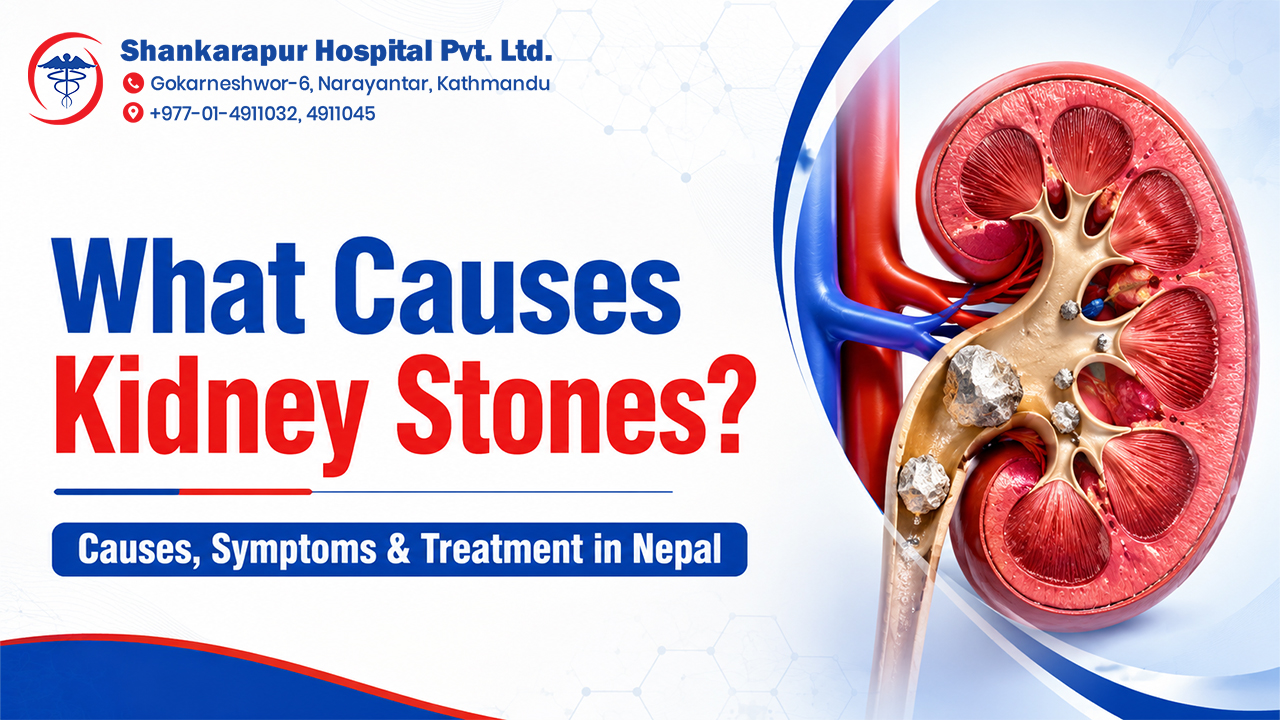
7) Kidney stones or bladder stones
Stones can cause urinary pain and sometimes blood in urine. Shankarapur Hospital’s educational article on hematuria notes kidney stones as a common cause and explains that infections or stones can irritate the urinary lining.
Clues
- sudden, severe flank/side pain (kidney stone)
- blood in urine
- nausea
- urinary urgency if the stone is low/downstream
What doctors may do
- urine tests + imaging (ultrasound/CT depending on case)
8) Prostatitis (inflammation/infection of the prostate) common in men
Mayo Clinic notes prostate problems are a frequent cause of painful urination in men.
Clues
- burning urination
- pelvic/perineal discomfort
- painful ejaculation (sometimes)
- urinary frequency or weak stream
Prostate-related dysuria often needs clinician evaluation; treatment varies based on the cause.
9) Urinary obstruction or poor flow (e.g., enlarged prostate/BPH, urethral stricture)
When urine flow is blocked or restricted, the bladder and urethra may become irritated.
Clues
- weak stream
- straining to start urination
- feeling of incomplete emptying
- dribbling
Shankarapur Hospital’s hematuria article also lists enlarged prostate as a possible urinary cause (often discussed with urinary symptoms in men).
10) Bladder pain syndrome (interstitial cystitis) or less common serious causes
AAFP highlights interstitial cystitis/bladder pain syndrome as a noninfectious cause of dysuria and urinary discomfort.
Mayo Clinic also notes painful urination can rarely be linked to more serious causes like stones and cancers of the urinary tract (especially if there is blood in urine or persistent symptoms).
Clues
- repeated urinary pain with negative cultures
- bladder/pelvic pain that improves after urinating
- symptoms lasting weeks/months
Important
Persistent symptoms should be evaluated by a urologist in Kathmandu to avoid missed diagnoses.
How doctors diagnose painful urination (tests table)
A urology doctor in Kathmandu typically starts with history + exam, then chooses tests based on your symptoms and risk factors.
|
Test |
What it looks for |
When it’s commonly used |
|
Urinalysis (dipstick + microscopy) |
infection signs, blood, protein |
First-line for most dysuria cases |
|
Urine culture & sensitivity |
exact bacteria + which antibiotics work |
recurrent, complicated, severe, or treatment failures; important with AMR |
|
STI testing (urine/swab/blood depending) |
urethritis causes |
if risk factors or symptoms suggest urethritis |
|
Ultrasound / CT (case-dependent) |
stones, obstruction, structural issues |
flank pain, hematuria, recurrent issues |
|
Cystoscopy (specialist test) |
inside of bladder/urethra |
persistent hematuria, suspected structural problems |
Treatment overview: what’s typical, what to avoid
Treatment depends on the cause; this is why testing is so valuable.
What to avoid
- Avoid taking leftover antibiotics or buying antibiotics without proper evaluation. Resistance in urinary pathogens is well-documented, and wrong antibiotics can delay recovery.
- Avoid harsh soaps/irritants if symptoms start after product use.
What’s commonly recommended (by cause)
|
Cause |
Typical approach |
|
Uncomplicated UTI |
urine test ± antibiotics per guideline/doctor; hydration |
|
Kidney infection |
urgent evaluation; antibiotics; sometimes IV treatment |
|
Stone |
pain control, hydration plan, imaging; procedure if needed |
|
Prostatitis |
evaluation; antibiotics if bacterial; symptom control |
|
Vaginitis/irritation |
targeted treatment (antifungal/other) + remove irritants |
|
Bladder pain syndrome |
structured evaluation; symptom-based management |
When to see a urologist in Kathmandu urgently
Seek urgent care (same day) if painful urination comes with:
- fever, chills, severe weakness
- back/side pain below the ribs
- blood in urine (especially repeated or heavy)
- vomiting or inability to keep fluids down
- pregnancy (UTIs need careful management)
- severe pain, or symptoms worsening quickly
- repeated UTIs or symptoms that keep returning
If symptoms are mild but last more than 48–72 hours, a clinic visit is still a good idea.
Prevention: practical ways to reduce recurrence
These habits don’t replace medical care, but they can lower risk:
- Drink enough fluids so urine stays light yellow (unless your doctor restricted fluids).
- Don’t hold urine for long periods.
- Maintain good genital hygiene (gentle, fragrance-free products).
- If you get frequent UTIs, ask about prevention strategies and whether a culture-based plan is appropriate (important in AMR settings).
Why a urology hospital in Kathmandu can help
Pain while urinating is a symptom not a diagnosis. A urology service can help identify whether the cause is infection, stones, obstruction, prostate-related, irritation, or something else, and guide evidence-based treatment.
Shankarapur Hospital is located in Gokarneshor-06, Jorpati, Narayantaar, Kathmandu and lists Urology among its departments, along with diagnostic and imaging services that are often used in dysuria evaluation.
FAQ
What is the most common cause of pain while urinating?
In many outpatient settings, infection (especially cystitis/UTI) is the most common cause of acute dysuria.
Can painful urination go away on its own?
Mild irritation may improve with hydration and avoiding irritants, but persistent symptoms should be tested especially to rule out UTI or stones.
Should I start antibiotics right away?
Not without evaluation. Because resistance is common, the “wrong” antibiotic can fail and worsen outcomes. Culture-guided care is especially helpful for recurrent symptoms.
Is painful urination always a UTI?
No. AAFP and Mayo Clinic both describe many infectious and noninfectious causes (urethritis, vaginitis, stones, irritation, prostate problems, bladder pain syndrome).

.jpg.jpeg)