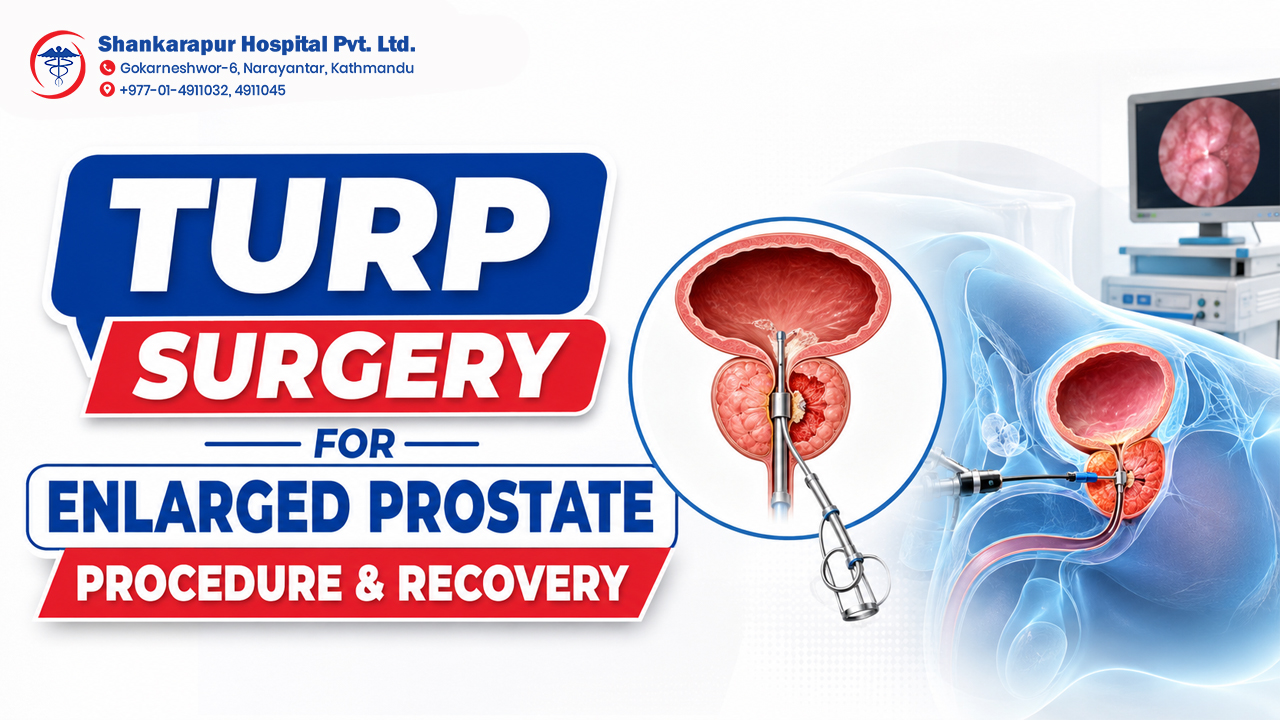
TURP surgery for enlarged prostate is a procedure used to relieve urinary obstruction caused by benign prostatic hyperplasia (BPH). During TURP, a surgeon passes an instrument through the urethra and removes selected prostate tissue that is blocking urine flow. There is no external surgical incision.
TURP is not necessary for every enlarged prostate. Mild or manageable symptoms may be treated through observation, lifestyle changes or medication. Surgery may become appropriate when symptoms are severe, other treatments are not helping, or complications such as urinary retention develop.
Shankarapur Hospital's Urology Department in Kathmandu specifically lists Prostate Enlargement Treatment (TURP) among its urological services.
What Is an Enlarged Prostate or BPH?
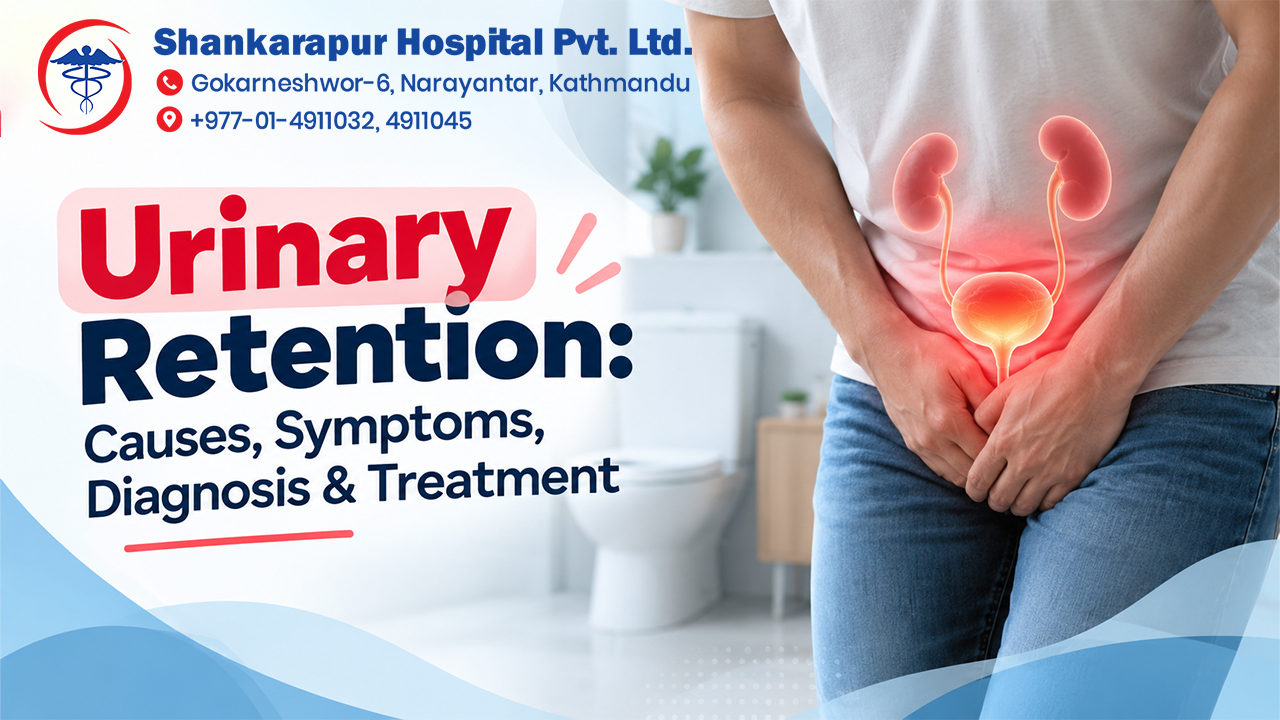
Benign prostatic hyperplasia (BPH) is a non-cancerous enlargement of the prostate gland.
The prostate sits below the bladder and surrounds part of the urethra, the tube through which urine leaves the bladder. As prostate tissue enlarges, it can narrow the urethra and interfere with urine flow.
BPH may cause symptoms such as:
- trouble starting urination;
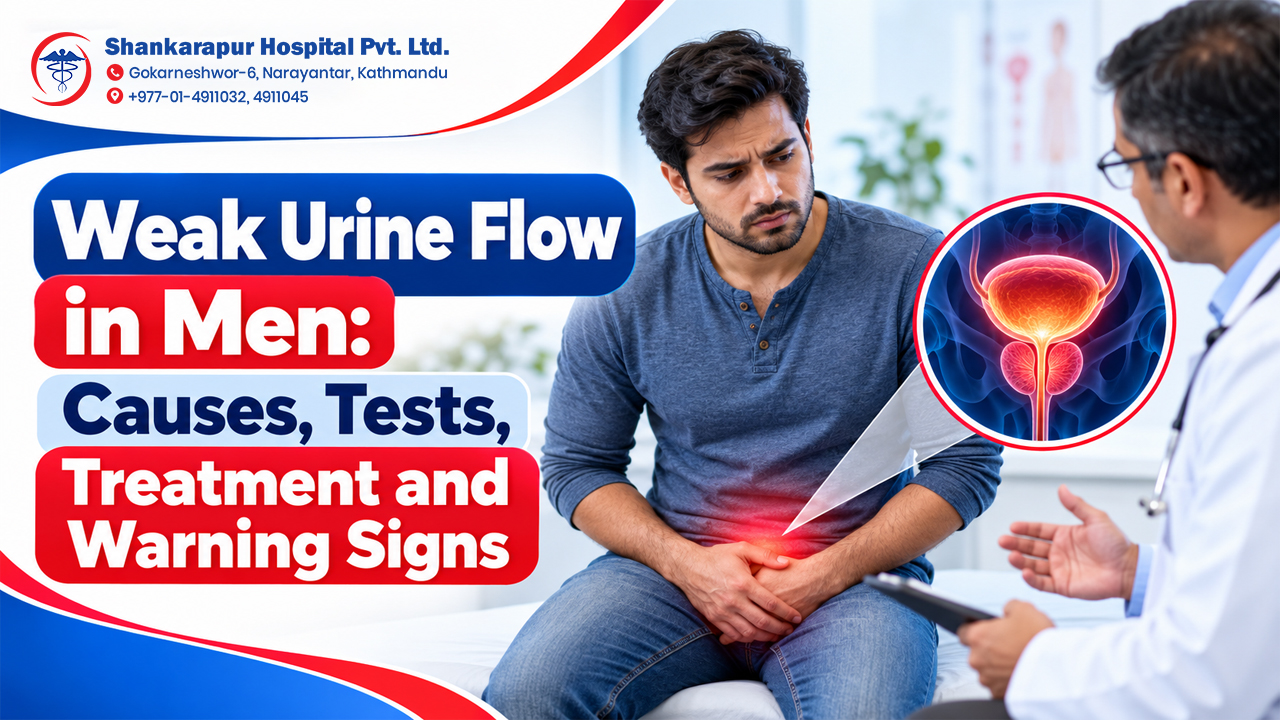
- weak or interrupted stream;
- dribbling;
- frequent urination;
- urgency;
- waking repeatedly at night to urinate;
- difficulty emptying the bladder completely.
Importantly, symptom severity does not always correspond directly with prostate size. A relatively large prostate may cause few symptoms, while a smaller enlargement can sometimes significantly affect urine flow.
Urinary symptoms can also occur with bladder disorders, urinary infection, prostatitis or prostate cancer. Therefore, symptoms alone should not be used to diagnose BPH.
What Is TURP Surgery?
TURP stands for Transurethral Resection of the Prostate. It is an operation that removes obstructing prostate tissue through the urethra to improve urine flow.
“Transurethral” means the surgeon accesses the prostate through the urinary passage rather than making a skin incision.
During the procedure, a thin operating instrument containing a camera and surgical tools is passed through the penis and urethra to the prostate. The surgeon removes small amounts of obstructing prostate tissue.
TURP does not normally mean removal of the entire prostate.
The aim in BPH surgery is to remove enough obstructing tissue to improve the passage of urine while leaving other prostate tissue in place.
The American Urological Association includes TURP as an established treatment option for men with lower urinary tract symptoms attributed to BPH.
When Is TURP Needed for an Enlarged Prostate?
TURP may be considered when BPH causes significant urinary symptoms, complications or inadequate improvement with other treatment.
Not every man with BPH should move directly to surgery.
Treatment decisions consider:
- symptom severity;
- impact on quality of life;
- response to medication;
- urinary retention;
- recurrent urinary problems;
- prostate anatomy and size;
- overall medical health;
- patient preferences.
NIDDK notes that BPH can be treated through watchful waiting, medicines, minimally invasive therapies or surgery. Surgery may be recommended when medicines do not help, symptoms are significantly bothersome or BPH-related complications develop.
Situations where surgery may become more relevant
Current urological guidance identifies circumstances such as:
- persistent or refractory urinary retention;
- recurrent urinary tract infection caused by obstruction;
- recurrent bladder stones;
- gross hematuria attributed to BPH;
- kidney impairment resulting from BPH;
- significant urinary symptoms that do not respond adequately to other treatment.
Symptoms that may lead to assessment for TURP
The NHS lists TURP as potentially useful for men who:
- urinate very frequently;
- still feel the need to urinate after going;
- take a long time to urinate;
- have a urine stream that stops and starts;
- experience urinary leakage.
These symptoms do not automatically mean surgery is necessary. A urologist must first establish whether prostate obstruction is actually responsible.
What Tests Are Done Before TURP?
Evaluation before TURP confirms the cause and severity of urinary obstruction and helps determine whether surgery is appropriate.
A typical BPH evaluation may include medical history, physical examination and selected urinary or prostate tests.
NIDDK lists possible investigations including:
- urinalysis;
- prostate-specific antigen (PSA) testing where appropriate;
- prostate assessment;
- urodynamic testing;
- cystoscopy;
- ultrasound.
Before surgical intervention, urological guidelines also discuss assessment of prostate size and shape, post-void residual urine and uroflowmetry, with pressure-flow studies considered when the diagnosis remains uncertain.
At Shankarapur Hospital, Diagnostic & Imaging Services currently include ultrasound, CT scanning and laboratory diagnostic support. The exact tests required for an individual TURP patient should be determined by the treating urologist.
How Is TURP Surgery Performed?
TURP is performed through the urethra, usually under spinal or general anesthesia, without an external surgical incision.
Step 1: Anesthesia
The procedure may be performed under:
- general anesthesia, where the patient is asleep; or
- spinal anesthesia, where the lower body is numb.
The appropriate option depends on clinical and anesthetic assessment.
Step 2: Instrument insertion
The surgeon passes a thin operating instrument through the urethra toward the prostate.
Because the natural urinary passage is used, TURP generally does not require an external cut or stitches.
Step 3: Removal of obstructing tissue
The surgeon removes sections of prostate tissue that are narrowing the urinary passage.
The goal is to create more space for urine to flow through the urethra.
Step 4: Catheter placement
After TURP, a urinary catheter is usually placed into the bladder.
The catheter allows urine and blood to drain while the operated area begins healing.
Step 5: Recovery and monitoring
Patients are monitored after anesthesia and surgery.
Some blood in the urine, urinary frequency, discomfort or temporary urinary-control difficulties may occur during the early recovery period.
What Are the Benefits of TURP?
The main objective of TURP is to relieve bladder-outlet obstruction and improve urinary symptoms caused by an enlarged prostate.
Potential benefits can include improvement in:
- urinary flow;
- difficulty starting urination;
- interrupted flow;
- incomplete bladder emptying;
- urinary frequency;
- other obstruction-related symptoms.
The American Urological Association continues to recognize TURP as an established surgical treatment option for lower urinary tract symptoms caused by BPH.
However, results vary between individuals.
TURP does not mean that every urinary symptom will disappear, particularly when symptoms also arise from bladder dysfunction, neurological disease or another urinary condition.
What Are the Risks and Possible Side Effects of TURP?
TURP is an established operation, but it has potential complications that should be discussed before surgery.
Possible complications can include:
- bleeding;
- urinary infection;
- temporary difficulty urinating;
- urinary urgency or frequency;
- urinary incontinence;
- scar formation and narrowing of the urethra or bladder outlet;
- sexual side effects;
- need for additional treatment in the future.
Retrograde ejaculation
One particularly important discussion before TURP is retrograde ejaculation.
After some prostate operations, semen may move backward into the bladder rather than exiting through the penis during ejaculation.
The NHS describes this as having no semen during ejaculation and notes that it may affect fertility.
Patients who are concerned about future fertility should discuss this specifically with their urologist before surgery.
Erectile function
Difficulty obtaining or maintaining an erection is listed among possible TURP complications, although individual risk varies.
Urinary-control problems
Temporary urgency or difficulty controlling urine may occur while the urinary tract recovers. Persistent incontinence is a less common but important complication to discuss before surgery.
What Is Recovery Like After TURP?
Recovery varies depending on the individual, the extent of surgery, medical conditions and postoperative progress.
The NHS reports that many patients leave hospital approximately 1–4 days after TURP, while usual activities may often resume over approximately 2–4 weeks; complete healing can take longer. These figures are general guidance from the UK and should not be treated as a fixed discharge or recovery timeline for patients in Nepal.
Immediately after surgery
You may have:
- a urinary catheter;
- blood mixed with urine;
- urinary discomfort;
- frequent urge to urinate after catheter removal;
- temporary difficulty controlling urination.
These symptoms usually improve as healing progresses, but your own surgical team should provide specific postoperative instructions.
When should you seek urgent medical attention after TURP?
Urgent reassessment may be necessary for:
- inability to urinate;
- significant or increasing bleeding;
- fever or chills;
- signs of infection;
- worsening pain;
- concerning blood clots in urine.
Follow the discharge instructions from the treating hospital rather than relying solely on general online guidance.
Are There Alternatives to TURP?
Yes. TURP is one of several treatment options for BPH.
Treatment selection depends on symptom severity, prostate characteristics, complications, medical fitness, priorities regarding sexual function and the treatments available locally.
Watchful waiting
When symptoms are mild and do not significantly affect quality of life, monitoring and lifestyle measures may be appropriate.
Medicines
Common BPH medicine categories include:
- alpha blockers;
- 5-alpha-reductase inhibitors;
- selected other medicines depending on symptoms and medical circumstances.
Medication choice should be made by a healthcare professional.
Minimally invasive procedures
Several minimally invasive BPH treatments exist, including therapies that widen the urethra or reduce prostate tissue. Availability differs between healthcare systems and hospitals.
Laser and other prostate surgery
Other surgical options can include:
- laser procedures;
- prostate vaporization;
- enucleation procedures;
- simple prostatectomy for selected very large prostates.
Current guidelines emphasize choosing a procedure according to prostate anatomy, clinical circumstances, patient priorities and surgeon expertise.
Shankarapur's current Urology Department specifically verifies TURP for prostate enlargement. Availability of other prostate procedures should be confirmed directly with the department rather than assumed.
TURP vs Medication: Which Is Better?
There is no universally “better” choice.
| Treatment | Often considered when | Main limitation |
| Monitoring | Symptoms are mild | Symptoms may progress |
| Medication | Symptoms require treatment but surgery is not yet preferred/necessary | Medicines may not provide adequate relief for everyone |
| TURP | Significant obstruction or symptoms, failed treatment or complications | Requires surgery and carries procedural risks |
| Other procedures | Appropriate anatomy and patient goals | Availability and suitability vary |
The key question is therefore not:
“Is TURP better than medicine?”
It is:
“Which treatment best matches this patient's symptoms, prostate anatomy, complications and priorities?”
Enlarged Prostate Treatment in Nepal: When to See a Urologist
Persistent urinary symptoms should be assessed rather than automatically attributed to age.
A urologist may help determine whether symptoms come from:
- BPH;
- urinary infection;
- bladder dysfunction;
- prostatitis;
- urinary stones;
- urethral narrowing;
- another prostate or urinary condition.
NIDDK advises prompt medical care if a person cannot urinate at all, has blood in the urine, or develops painful urgent urination together with fever or chills.
Shankarapur Hospital is located at Gokarneshor-06, Jorpati, Narayantaar, Kathmandu. Its Urology Department lists TURP for prostate enlargement, and its hospital services include OPD consultation, diagnostic imaging and inpatient care.
If you have persistent weak urine flow, difficulty emptying your bladder, repeated nighttime urination or have already been advised to consider prostate surgery, you can book a urology consultation at Shankarapur Hospital for individual assessment.
Urology Specialist at Shankarapur Hospital
Shankarapur Hospital currently lists Dr. Wesh Ansari as a Urology & Kidney Transplant Surgeon under its Urology Department.
The hospital's current Urology page verifies:
- kidney stone management through PCNL, URS and RIRS;
- prostate enlargement treatment through TURP;
- urinary tract infection management;
- male infertility and sexual-health care;
- urinary-incontinence treatment.
Specific suitability for TURP must still be decided after individual urological assessment.
Questions to Ask Before TURP Surgery
Before agreeing to surgery, consider asking your urologist:
- Are my urinary symptoms definitely related to BPH?
- Why are you recommending TURP in my case?
- Are medicines or other procedures still reasonable options?
- What tests do I need before surgery?
- What type of anesthesia is planned?
- How long might I need a catheter?
- How long might I stay in hospital?
- What are the main risks in my particular case?
- How could the operation affect ejaculation or fertility?
- What symptoms after discharge should make me contact the hospital?
- What follow-up will I need?
These questions help move the conversation from simply “having TURP” to making an informed treatment decision.
Key Takeaways
TURP surgery for enlarged prostate is an established surgical option for relieving urinary obstruction caused by BPH.
TURP:
- removes obstructing tissue through the urethra;
- normally requires no external incision;
- may be recommended when symptoms or complications justify surgery;
- usually involves temporary catheterization;
- carries possible urinary, bleeding and sexual side effects;
- is not the only treatment for BPH.
The correct treatment begins with proper urological assessment rather than prostate size alone.
Frequently Asked Questions
What is TURP surgery?
TURP, or transurethral resection of the prostate, is an operation used to remove prostate tissue that is obstructing urine flow. A surgical instrument is passed through the urethra, so the procedure normally does not require an external skin incision.
When is TURP recommended for an enlarged prostate?
TURP may be considered when BPH causes significant urinary obstruction, severe symptoms, urinary retention or certain complications, or when other treatment has not provided sufficient relief. Suitability depends on the patient's symptoms, anatomy, overall health and treatment goals.
Does TURP remove the entire prostate?
No. TURP generally removes selected prostate tissue that is obstructing the urethra rather than removing the entire prostate gland. Its purpose in BPH is to create a clearer urinary passage.
Is TURP surgery only for prostate cancer?
No. TURP is commonly used to treat urinary obstruction caused by benign prostate enlargement. BPH is a non-cancerous condition. The NHS also notes that TURP can be used in selected prostate-cancer circumstances, but that is a separate clinical indication.
Is TURP painful?
The operation is performed under general or spinal anesthesia. After surgery, some soreness, urinary burning, frequency or discomfort may occur during recovery. Pain experience varies, and the treating team determines appropriate postoperative pain management.
Will I need a catheter after TURP?
Usually, yes. A urinary catheter is generally placed after TURP to drain the bladder while swelling and bleeding settle. The duration depends on the patient's recovery and the treating surgeon's plan.
How long does TURP recovery take?
Recovery varies. NHS patient guidance reports that many people leave hospital within approximately 1–4 days and may resume usual activities over 2–4 weeks, with full healing taking longer. These are general figures rather than guaranteed recovery times for individual patients.
Does TURP affect sexual function?
It can. One important potential effect is retrograde ejaculation, where semen moves backward into the bladder rather than exiting normally. Erectile difficulties can also occur. Patients concerned about sexual function or fertility should discuss these risks before surgery.
Can the prostate grow again after TURP?
Prostate tissue remains after TURP, so symptoms can recur in some patients over time and additional treatment may occasionally become necessary.
Is TURP better than laser prostate surgery?
Neither procedure is automatically best for every patient. Current BPH guidelines include TURP as well as several laser and minimally invasive options. The choice depends on prostate size and anatomy, available technology, medical factors, patient priorities and surgeon experience.
What happens if BPH is not treated?
Mild BPH may sometimes be monitored. However, significant obstruction can contribute to urinary retention, recurrent infection, bladder stones, blood in the urine and, in some cases, kidney problems. Treatment decisions depend on symptom severity and clinical findings.
When is an enlarged prostate an emergency?
Seek urgent medical care if you suddenly cannot urinate, especially if accompanied by severe lower abdominal discomfort. Blood in the urine or painful frequent urination accompanied by fever and chills also requires prompt assessment.
Where can I get TURP surgery in Kathmandu?
Shankarapur Hospital's Urology Department in Gokarneshor-06, Jorpati, Narayantaar, Kathmandu explicitly lists Prostate Enlargement Treatment (TURP) among its current services. Patients should first undergo urological assessment to determine whether TURP is appropriate.
How much does TURP surgery cost in Nepal?
A reliable single price cannot be provided without verified hospital pricing. Cost may vary according to preoperative tests, anesthesia, procedure requirements, hospital stay, medicines, consumables and follow-up. Patients should request a current estimate after urological evaluation.